
The design philosophy of the CGDG Xinjiang Beautiful China Resort Kuitun Holiday Inn Hotel Project is from Aedas Global Design Principal Kevin Wang.
'Architects go far beyond designing buildings; we shape timeless cultural memories.' Kevin says. The completion of the CGDG Xinjiang Beautiful China Resort Kuitun Holiday Inn Hotel Project signifies the birth of a new paradigm in hospitality, allowing every traveler to find inner harmony at the intersection of vibrancy and tranquility.
'The flowing form not only responds to the landscape but also conveys an inviting gesture. The design provides a light tension and inclusive warmth for visitors approaching from various directions.'
Guided by this philosophy, we shape renders that quietly speak their own stories.
©Aedas

©Aedas
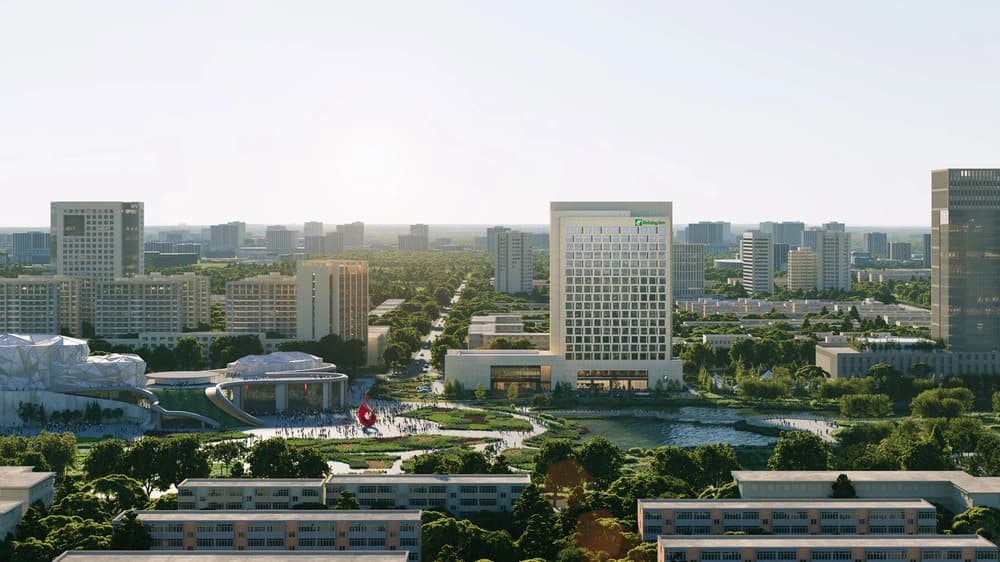
©Aedas
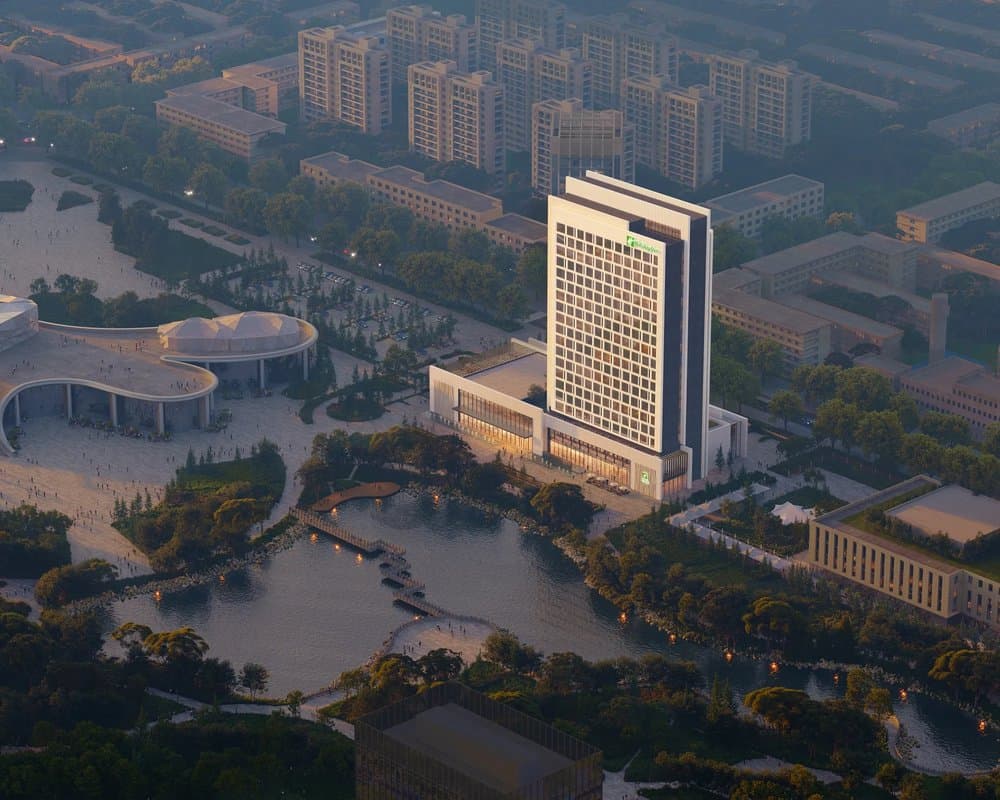
©Aedas

©Aedas

©Aedas
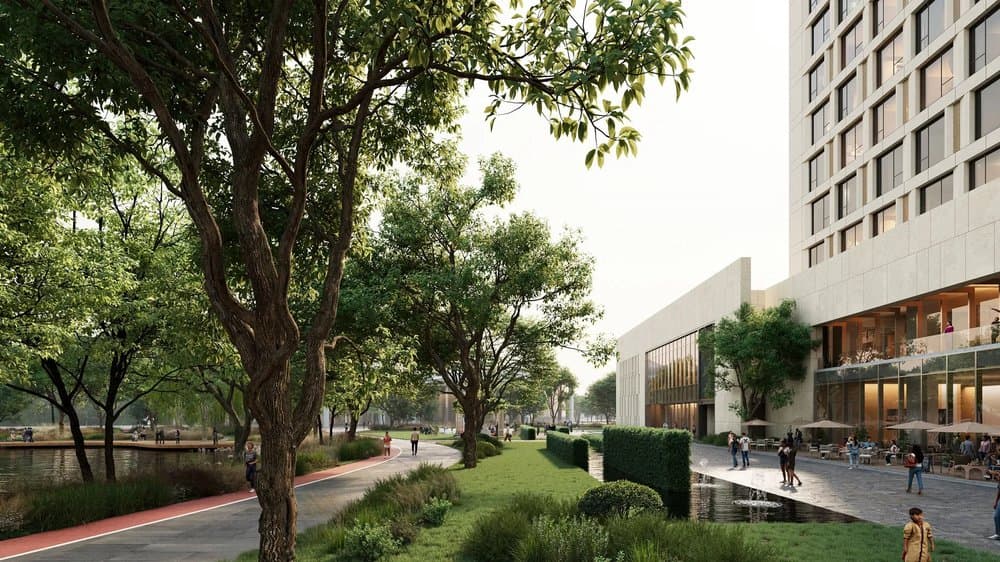
©Aedas
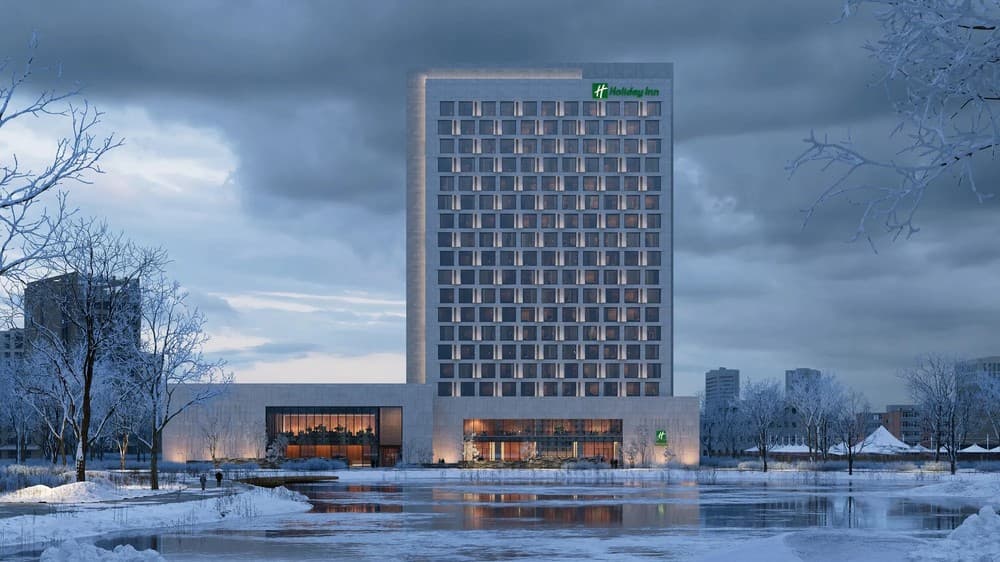
©Aedas
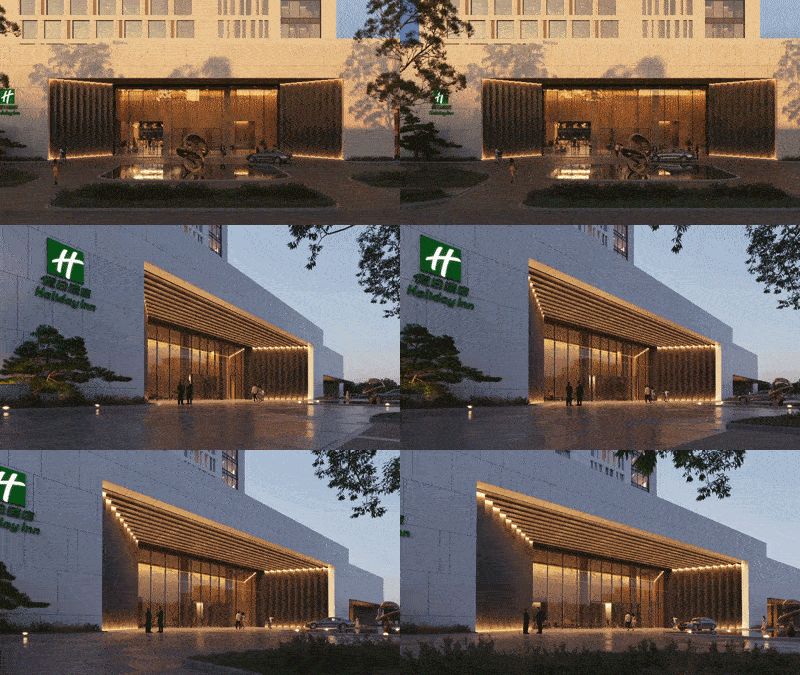
©Aedas
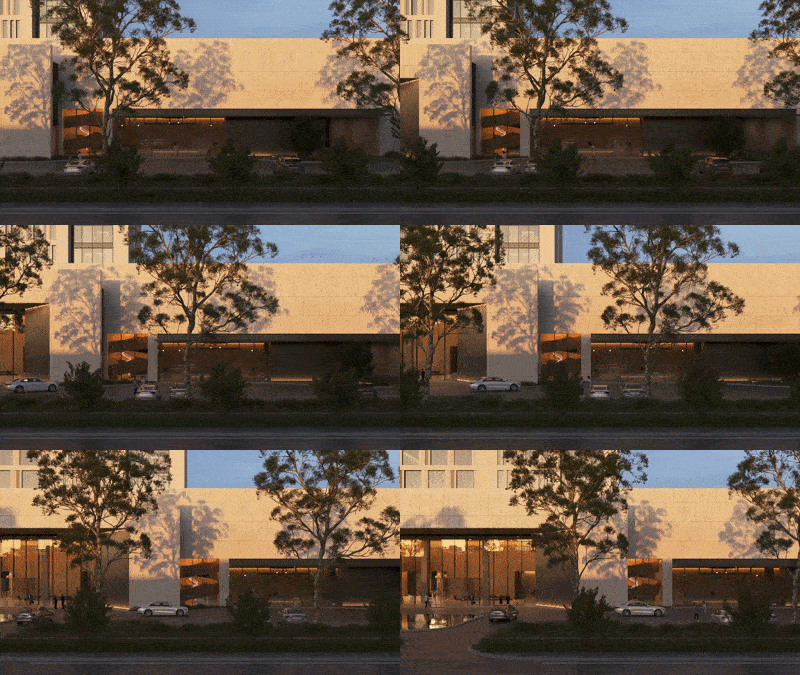
©Aedas

©Aedas
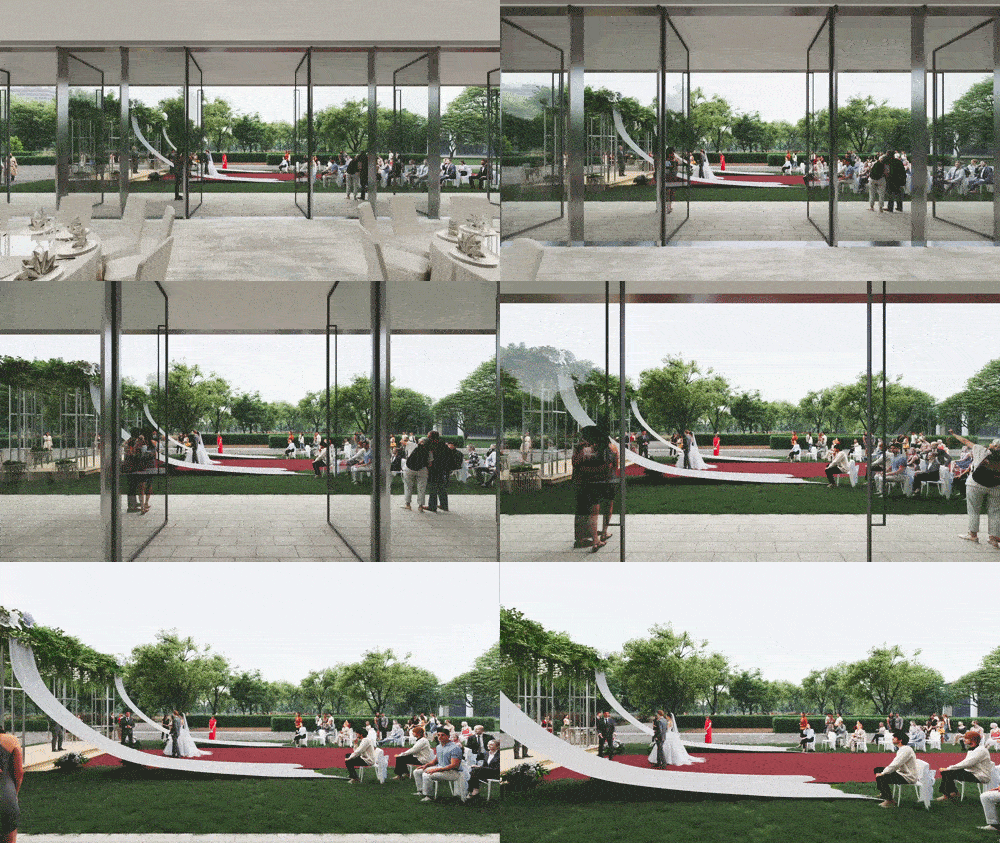
©Aedas

©Aedas
Resting in my grandfather’s quiet company, I listen to stories of bygone days.
Time rewinds to the late Qing Dynasty—a time when Western nations, beginning in the mid-17th century, were flourishing as they built modern nation-states, while the feudal ruling classes, unwilling to relinquish their supreme imperial power, were on the verge of collapse.
My great-grandfather operated an inn, teahouse, tavern and horse equipment shop back then in Xiongjiachang, Zhijin, Guizhou, a market established since the reign of Emperor Kangxi.
All his properties were located at a crucial point on the Southern Silk Road.
In the late Qing Dynasty, long journeys relied on horseback due to the lower productivity compared to the West after the steam revolution, so his horse equipment shop provided feed and horseshoes. His inn and teahouse catered not only to merchants and officials needing replenishment of provisions or short rest or long-term lodging, but also to tenant farmers paying rent as my great-grandfather was also a feudal landlord, a term not considered positive at a time when progressive proletarian revolutions were sweeping the world. Descriptions of land annexation, exploitation, violence, bloodshed, and even the hands stained with the blood of the lower classes clung to him like maggots, so naturally ingrained in the feudal era that he was unaware of his own backwardness.
Even though hotel practices during the feudal monarchical era naturally bore the imprint of feudalism and the limitations of the time, in my great-grandfather's teahouse, tavern and inn, the Miao, Yi, Xuanwei, and Klau ethnic groups living alongside the Han Chinese likely became acquainted, and converged, their languages, customs, and stories flowing into one another like wandering rivers; those visiting relatives or perhaps beggars and homeless vagrants seeking refuge also found a sliver of warmth.
My great-grandfather’s business was able to adapt to the changing times and continue to thrive. He was able to provide for his family and was able to pass on his business to his children.
Thirty-five kilometers south of Zhijin lies Xiongjiachang, where the Mengba River has carved a hundred-zhang-high, five-kilometer-long white cliff. Fifty meters up the cliff face, a square cave entrance, like a seal, with a hall inside capable of holding a thousand people, is called the Sifang Cave (Square Cave). It stands as a mark of time, etched into the precipice with blood and fire, a testament to the ill-fated ideals of Mingshan Li, the brother of my great-grandfather.
From the late Qing Dynasty to the Republic of China era, Mingshan Li also repaired bridges and roads, established schools, and invited Shiming Deng, a renowned private tutor from Zhijin, to teach in his hometown of Zhucang. He also provided substantial financial assistance to the children of his clan for their education. In 1948, when a fire broke out at the southern gate of moat in Zhijin, he led people to fight the blaze and, the following day, had his family cook the displaced, distributing money and food for relief.
However, being a feudal landlord himself, he did not yet realize that the wheels of history were already rolling toward a more civilized future. Though he had once walked an honorable path and aided those in need, his faith in absolute power never truly wavered.
Feudalism was not entirely negative; the construction of humanistic concepts of the new era did not spring from thin air, but founded by the wisdom and heritage of those who came before us.
I firmly believe that it is the interplay of coldness and warmth within the millennia-long feudal autocracy of this land that has brought our company's alliance of free people, currently operating downstream in the architecture industry, to your side—without employment, exploitation, or oppression, we collaborate spontaneously, work as wish, and pour our inspiration and passion into every project.